
Pilates for Running – Your Osteopath on Northcote Road
Here is an interesting article on stability from Runners World. Osteopaths can help assess and advice on improving your core stability as well as treat sports injuries should they occur.
Why runners should do Pilates
We’ve got the lowdown on all things Pilates and why it’s so good for runners.

Pilates is often compared to yoga, but they actually have very different backgrounds. While yoga is a centuries-old practice with close links to spirituality, Pilates is a mind and body conditioning technique developed by Joseph Pilates in the 1920s. Classes feature exercises to improve core stability and encourage healthy posture. Various pieces of equipment such as stability balls, resistance bands, foam rollers and Pilates studio equipment, like Reformers, may be used.
“What we’re really trying to do is teach people how to move better,” says Lynne Robinson, co-founder and director of Body Control Pilates. “We have three fundamentals – the ABCs. One is correcting the alignment of the body (A), then working on your breathing (B) and centring (C), which is core stability.”
Core stability is essential for good running technique and to help avoid injury. “In terms of runners, sometimes a slight imbalance in the body will go on to create problems because it’s such a repetitive movement that you’re doing. Even a small adjustment in your posture or in your core stability can make a huge impact,” says Robinson.
What’s the difference between matwork Pilates and Reformer Pilates?
Both classes work the same muscles in the same way, but just with different challenges. Matwork takes place on the floor and can be done without any equipment or with small items to make it more challenging (such as balls, bands and rollers). Reformer classes use Universal Reformers (see one here). These are frame structures with springs and pulleys that provide resistance as exercises are carried out, and give a symmetrical grid to work in.
What are the benefits of each kind?
With Reformers, the closed chain environment provides a particularly effective workout. “We can really work on correcting hip, knee and ankle alignment, and improving the tracking of the knee”, Robinson says. “Particularly useful for runners with knee problems, we can focus on the vastus medialis obliquus, one of your quadriceps. Even though runners often get strong quads, this stabilising muscle can be weak. There’s also a Reformer attachment called a jump board, which is great for improving your running action.”
In terms of matwork, Robinson says the main benefit is “you can do matwork anywhere, in particular before and after your run. Unless you live above a studio you won’t have access to the equipment 24/7.” Additionally, Pilates accessories are widely available to buy if you wish to supplement your routine.
“With the Reformer, you probably get slightly quicker results than you will do just doing the matwork, however realistically most runners are not going to have access to a Reformer before and after they run. So, what they’ve got to do is come up with a few simple exercises to do.”
Check out our pre-run Pilates moves for better form.
To book an appointment visit www.ltosteo.co.uk call 02072062625 or email info@ltosteo.co.uk.
Karen Eastwood
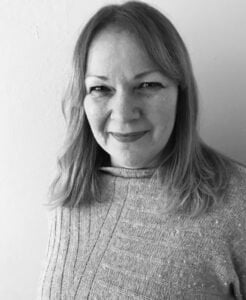
Karen qualified at the British School of Osteopathy in 1998. She has a special interest in Women’s Health and has taken post graduate courses in Obstetrics which involved working in St Mary’s Maternity Unit observing both physiological births and caesarian sections. This fuelled her passionate work with women in pregnancy. Her approach is to work with them to build confidence and teach empowering techniques for managing labour as well as working with the musculoskeletal system to ensure optimum health. Karen has trained in the Body Control Pilates System and refined her knowledge to address postnatal concerns. She is currently studying the Award in Paediatric Osteopathy at the Osteopathic Centre for Children.
Karen has completed post-graduate training in Osteopathic Treatment of Chronic Fatigue Syndrome and has a personal interest in stress, trauma and anxiety management.
Karen is available at Fresh Ground on Mondays 8-12pm, Wednesdays 8-11am and Saturdays 9-1pm.
For an appointment or further questions please call 020 7206 2625 or email info@ltosteo.co.uk